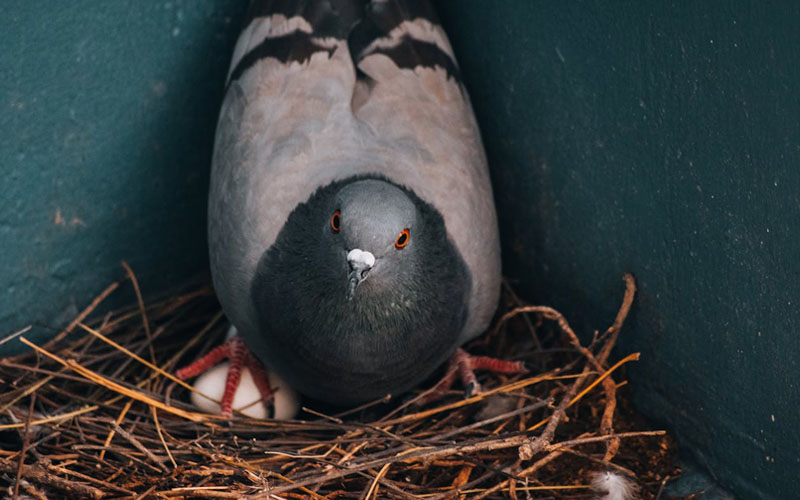
Why Are Pigeon Nests So Bad? (6 Reasons Why)
Pigeon nests are problematic due to their messiness and potential health hazards. They’re typically built with twigs, feathers, and droppings, which can create unsightly and unhygienic conditions. These nests often harbor parasites and bacteria, posing risks to human health. Additionally, their location choices, like rooftops and ledges, can cause structural damage and nuisance to property owners.
What does a pigeon nest look like?
A pigeon nest is typically a simple, loosely constructed structure made from twigs, straw, and small branches. Pigeons often build their nests in sheltered locations such as building ledges, rooftops, or tree branches. The nest is usually flat and platform-like, with a shallow depression in the center to hold the eggs. Unlike some birds, pigeons do not create intricate or tightly woven nests; their constructions are often rudimentary and may appear messy. Both male and female pigeons contribute to building the nest. Which is reused and reinforced over time, often becoming more substantial with repeated use.
Why Do Pigeons Make Bad Nests?
Pigeons are not known for their expertise in nest-building compared to other bird species. There are a few reasons why pigeons tend to make relatively poor nests:
- Limited materials: Pigeons often use whatever materials they can find nearby to construct their nests, which may not always be the most suitable or sturdy. They typically use twigs, leaves, and other debris rather than more specialized materials like grass, feathers, or mud.
- Simple structure: Pigeon nests are usually quite simple in design, often consisting of just a few sticks or twigs loosely piled together. They lack the intricate weaving or shaping seen in the nests of many other bird species.
- Lack of protection: Pigeon nests are often exposed and vulnerable, located on ledges, building eaves, or other open areas. This lack of protection makes them more susceptible to damage from wind, rain, predators, or human interference.
- High reproductive rate: Pigeons have evolved to reproduce quickly and frequently, often laying multiple clutches of eggs each year. This rapid reproductive cycle means that pigeons may prioritize speed over quality when building nests.
- Urban adaptation: Pigeons have adapted well to urban environments, where they often nest on buildings and other man-made structures. In these environments, they may face fewer natural predators and have access to a constant supply of food, which may reduce the pressure to build elaborate nests for protection.
6 Reasons: Why Are Pigeon Nests So Bad?
Pigeon nests can be problematic for several reasons, ranging from health hazards to structural damage. Here are 6 reasons why pigeon nests are so bad:
1. Health Risks
Pigeon nests often harbor various pathogens, parasites, and allergens that can pose serious health risks to humans. The accumulation of pigeon droppings and feathers in nests can lead to the growth of harmful bacteria such as Salmonella, E. coli, and Histoplasma. These pathogens can be transmitted to humans through the inhalation of contaminated dust or direct contact, leading to respiratory infections, allergic reactions, and even potentially life-threatening diseases.
2. Property Damage
Pigeon nests can cause extensive damage to buildings and structures. Pigeons often build their nests in gutters, vents, and other openings, leading to blockages and drainage issues. The acidic nature of pigeon droppings can corrode building materials such as metal, wood, and concrete, resulting in costly repairs and maintenance. Additionally, the weight of accumulated nests and debris can compromise the structural integrity of roofs and ledges, posing safety hazards.
3. Fire Hazard
Pigeon nests constructed in or near electrical fixtures, such as lighting fixtures or power lines, can increase the risk of fire. Pigeons may gather flammable materials like twigs, straw, and paper to build their nests, which can ignite easily when exposed to heat sources. In urban areas with densely packed buildings, a fire sparked by pigeon nests can quickly spread, endangering lives and causing significant property damage.
4. Pest Infestation
Pigeon nests attract other pests, including insects and rodents, exacerbating existing pest problems in residential and commercial areas. The organic matter found in pigeon nests provides a suitable breeding ground for insects like flies, mites, and ticks, which can infest nearby buildings and pose additional health risks. Moreover, rodents such as rats and mice may be drawn to the food and shelter provided by pigeon nests, leading to further property damage and sanitation issues.
5. Noise and Disturbance
Pigeon nests can contribute to noise pollution, especially in urban environments where large pigeon populations congregate. Pigeons are known for their cooing and flapping sounds, which can be disruptive to residents and workers, particularly in areas with nesting colonies. The constant presence of pigeons and their nests may also deter people from using outdoor spaces or enjoying leisure activities, impacting the quality of life in affected areas.
6. Aesthetic and Environmental Concerns
Pigeon nests detract from the aesthetic appeal of buildings and public spaces, particularly when they accumulate in large numbers. Unsightly nests and droppings can diminish property values and deter potential tenants or customers. Furthermore, the presence of pigeons and their nests may disrupt local ecosystems by competing with native bird species for resources and spreading invasive plant species through the dispersal of seeds in their droppings.
FAQs About Pigeons Nest
Pigeons typically nest for about 3 to 6 weeks. During this time, they build their nests using twigs and other materials, lay eggs, and incubate them until they hatch. Once the chicks are born, the parents continue to care for them until they are ready to leave the nest, usually around 4 weeks old.
Pigeons do nest in trees. They build their nests on tree branches using twigs, leaves, and other materials they find. Trees provide pigeons with a safe and elevated spot to lay their eggs and raise their young.
Pigeon nests can attract other pests. The leftover food and droppings in the nests can lure insects like flies and beetles. Additionally, rodents might be drawn to the area, seeking shelter or scavenging food. It’s essential to clean up pigeon nests promptly to prevent the infestation of other pests.
Buildings should be checked for pigeon nests regularly, ideally every few months. This helps prevent potential damage and health hazards caused by bird infestations. Inspecting frequently ensures early detection and timely removal of nests, safeguarding the building’s integrity and occupants’ well-being.
Pigeons are generally poor nest builders because they prioritize speed and simplicity over durability. They often use minimal materials like twigs, leaves, and debris, creating flimsy, shallow structures. Unlike other birds, pigeons don’t invest much effort in weaving or securing their nests, leading to unstable and often poorly constructed homes. This behavior likely stems from their adaptability to urban environments, where they rely on man-made structures for support rather than building robust nests.
Destroying a pigeon nest can harm the birds and disrupt their breeding cycle. Pigeons may abandon their eggs or chicks, leading to their death. It can also cause stress to the birds, forcing them to relocate. In some regions, destroying nests may violate wildlife protection laws, resulting in legal consequences. If the nest is in an undesirable location, consider humane relocation methods or consult local wildlife authorities for guidance.
Pigeons typically nest for about 17 to 19 days, during which the female lays 1-2 eggs. Both parents take turns incubating the eggs. After hatching, the chicks, called squabs, remain in the nest for around 25 to 32 days before fledging. During this period, both parents feed and care for the young. Overall, the nesting period lasts approximately 6 to 7 weeks from egg-laying to fledging.
Pigeons typically do not nest in trees. They prefer sheltered, flat surfaces such as building ledges, rooftops, or cliffs. However, some species, like wood pigeons, may nest in trees, especially in wooded areas. Urban pigeons, like rock doves, rarely choose trees due to the lack of safety and stability. Their nesting habits depend on the species and environment, but most pigeons avoid trees for more secure, man-made structures.
Pigeons typically leave the nest around 25 to 32 days after hatching. During this period, they grow feathers, gain strength, and learn to fly. Parent pigeons care for their young, feeding them “crop milk” initially and then transitioning to seeds and grains. Once fledglings are capable of flying and foraging independently, they leave the nest but may stay nearby for a short time before fully dispersing.
To remove a pigeon nest, first ensure it’s legal in your area, as some birds are protected. Wear gloves and a mask for safety. Carefully remove the nest and dispose of it in a sealed bag. Clean the area thoroughly with disinfectant to remove droppings and debris. Install deterrents like spikes, nets, or repellent gels to prevent pigeons from returning.
A pigeon considers a nest successful if it provides safety, shelter, and a suitable environment for raising chicks. The nest, often made of twigs and leaves, should be sturdy and well-hidden to protect against predators. Access to food and water nearby is crucial. Success is ultimately measured by the survival and fledging of their offspring, ensuring the continuation of their lineage in a secure and nurturing habitat.
Having a pigeon nest in your house can have both positive and negative aspects. On the positive side, pigeons are often seen as symbols of peace and harmony. However, their nests can lead to hygiene issues, as droppings may carry diseases and attract pests. Additionally, nesting materials can block drains or vents.
Pigeons can build nests, but their nests are often simple and rudimentary compared to other birds. They typically use twigs, leaves, and other available materials to create shallow platforms. Their nesting skills are less advanced because they evolved to thrive in urban environments, where they rely on ledges and cavities rather than intricate nests. This adaptability allows them to survive in diverse habitats with minimal nesting effort.
Pigeons typically stay in the nest for about 25 to 32 days. After hatching, squabs (baby pigeons) are fed crop milk by both parents and grow rapidly. They begin to fledge (develop feathers) around 25 days and leave the nest shortly after. However, they may remain nearby, relying on their parents for food and guidance for a few more days before becoming fully independent.
Baby pigeons, or squabs, typically stay in the nest for about 25 to 32 days. During this time, they are fed crop milk by both parents and gradually transition to solid food. They grow rapidly, developing feathers and gaining strength. By the time they fledge, they are almost fully grown but may still rely on their parents for a short period before becoming fully independent.
Final Words
In conclusion, why are pigeon nests so bad? Pigeon nests are messy and fragile. These birds build with twigs, leaves, and trash, creating weak structures. Their nests often fall apart easily, putting eggs and chicks at risk.
Pigeons also reuse old nests, piling new layers on top, making them unstable. Poor locations, like balconies and ledges, add to the problem. Unlike other birds, pigeons don’t weave strong, secure homes.
Their quick, careless nesting habits result in sloppy, unsafe shelters. This makes their nests one of the worst in the bird world. Despite this, pigeons survive because of their adaptability and ability to breed year-round.